
Scaffold Platforms.
Scaffold platforms are a core component of safe and efficient work at height, providing stable, load-bearing surfaces for construction, maintenance, and inspection tasks. In the UK, their design and use must meet strict safety and compliance standards, ensuring that workers, tools, and materials are securely supported throughout a project.
The choice of scaffold platforms can significantly affect project safety, efficiency, and cost. With so many configurations and materials available, how can a commercial property owner, developer, or construction company decide which type is most suitable for their specific needs?
Key Takeaways
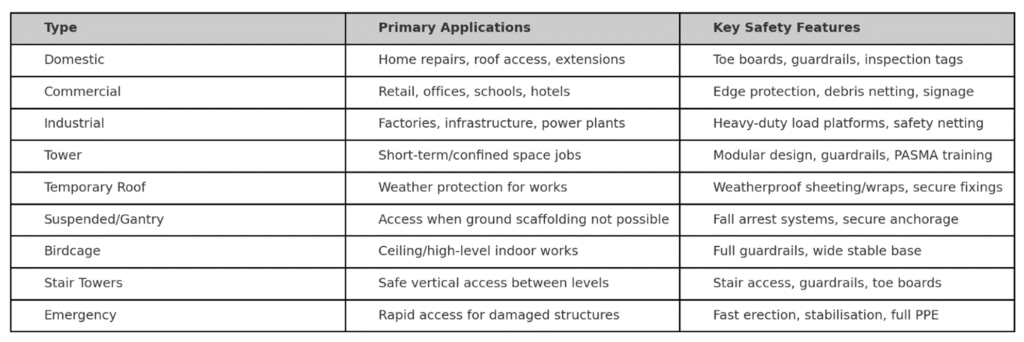
- Domestic scaffold platforms suit small projects, while industrial steel decks handle heavy loads.
- Guardrails, toe boards, and inspections are essential safety features.
- Timber, steel, aluminium, and composite boards each serve specific needs.
- Confined areas may require narrow platforms or mobile towers.
- Weather-sensitive work benefits from integrated temporary roof systems.
- Costs depend on size, duration, and location, especially in London.
Types of Scaffold Platforms for Different Projects
Domestic and Light Commercial Applications
For smaller projects, such as roof repairs, painting, or window replacement, domestic scaffold platforms offer quick setup and minimal disruption. These often use timber boards or lightweight aluminium decks, making them easy to install in confined spaces like residential gardens or narrow access points.
Large-Scale Commercial and Industrial Projects
When dealing with offices, retail premises, factories, or infrastructure, heavy-duty scaffold platforms are essential. Steel decks with high load ratings are favoured for supporting multiple workers and heavy equipment, ensuring stability over extended timeframes.
Key Safety Features of Scaffold Platforms
Guardrails, Toe Boards, and Fall Prevention
Every scaffold platform above two metres in height requires edge protection, including guardrails and toe boards. These prevent both falls and the risk of tools or materials dropping onto people below, meeting BS EN 12811-1 standards.
Inspection and Maintenance Protocols
Platforms must be inspected before first use, every seven days, and after adverse weather or alterations. This ensures compliance with the Work at Height Regulations 2005 and minimises the likelihood of accidents on site.
asbestos inspections
residential asbestos inspections
asbestos inspections
Residential asbestos inspections
Scaffolding Towers
Fast, flexible tower scaffolds for safe access to elevated areas in both domestic and commercial environments.
asbestos inspections
commercial asbestos inspections
asbestos inspections
commercial asbestos inspections
Material Options for Scaffold Platforms
Traditional Timber Boards
Timber scaffold boards, often 38 mm thick with metal end bands, remain common for their versatility and ease of handling. They are suitable for most tube-and-fitting scaffold systems.
Modern Alternatives – Steel, Aluminium, and Composite Decks
Steel platforms offer maximum strength for heavy industrial use, aluminium is corrosion-resistant and lightweight for mobile towers, and composite boards provide weatherproof, non-slip surfaces for long-term projects.
Choosing the Right Platform for Your Site Conditions
Confined or Restricted Access Areas
In tight spaces, narrow or single-width platforms allow safe working without overhanging hazards. Mobile towers with adjustable aluminium decks are often the most practical solution.
Weather-Sensitive or High-Risk Environments
For projects requiring protection from rain or wind, scaffold platforms can be integrated with temporary roof systems. In high-risk zones, reinforced steel platforms with advanced tie patterns ensure added safety.
scaffolding towers
London scaffolding towers
scaffolding towers
London scaffolding towers
Access Solutions
From scaffold towers to stair units and walkways, we provide safe, stable access for all areas of your site or property.
Costs and Budget Planning for Scaffold Platforms
Typical London Hire Rates
A small scaffold tower may cost £150–£250 per week, while a professional single-side scaffold is typically £550–£700 per week. Full wraparound scaffolding for a two-storey building can reach around £900 weekly.
Factors Influencing Costs
Costs vary based on platform height, total coverage area, hire duration, and site location. London projects often command higher rates due to access restrictions and permit requirements.
Compliance, Training, and Competence
CISRS and PASMA Certification
Fixed scaffold platforms must be erected by CISRS-qualified scaffolders, while mobile towers require PASMA-trained operatives. Certification ensures that assembly, alterations, and dismantling meet safety standards.
Legal Obligations for Employers
Under the Health and Safety at Work Act 1974 and CDM Regulations 2015, employers must provide safe working platforms, carry out risk assessments, and maintain records of inspections and load capacities.
Best Practice for Safe and Efficient Scaffold Platform Use
Preventing Overloading and Hazards
Platform load limits must never be exceeded. Keeping working areas clear of tools, debris, and trailing cables reduces trip and fall risks.
Integrating Safety Systems
Debris netting, guardrails, and access gates should be included where the public is nearby. These additions not only protect workers but also meet insurance and regulatory requirements.
Edge Protection & Safety Systems
We supply and install guardrails, toe boards, and netting to ensure complete fall protection and site safety compliance.
Conclusion
Scaffold platforms form the foundation of safe and productive work at height, offering versatility across domestic, commercial, and industrial projects. The right choice depends on a combination of project scale, site access, materials, and environmental conditions.
By considering safety features, compliance obligations, and cost implications, decision-makers can ensure their chosen scaffold platforms deliver both efficiency and protection throughout the project.
Frequently Asked Questions – Answers
What safety checks are required for scaffold platforms?
Scaffold platforms must undergo inspections before first use, every seven days thereafter, and after events such as severe weather or modifications. These checks confirm structural stability, edge protection, and load capacity compliance. Furthermore, inspection records must be kept on site to meet legal obligations under the Work at Height Regulations 2005.
Routine safety checks also ensure guardrails, toe boards, and access points remain secure. If hazards are detected, work should cease until corrective action is taken. This process reduces accident risks and upholds compliance with British Standards.
How do I choose between timber, steel, aluminium, and composite platforms?
Your choice should reflect project type, site access, and load requirements. Timber is versatile and widely available, while steel is ideal for heavy-duty industrial use. Aluminium offers lightweight handling for mobile towers, and composite boards provide weather-resistant, non-slip surfaces.
In addition, cost and duration of use should be considered. For long-term or outdoor projects, composite or steel platforms may be more cost-effective, while aluminium suits short-term or frequently relocated setups.
What training is needed to assemble scaffold platforms?
Fixed scaffold platforms must be erected, altered, or dismantled by CISRS-qualified scaffolders, ensuring compliance with safety standards. For mobile aluminium towers, PASMA training is required. These courses cover assembly techniques, load limits, and hazard prevention.
Ongoing refresher training and site-specific inductions are also important. This combination ensures operatives maintain competence and remain aware of current regulations, reducing the likelihood of incidents.
How much do scaffold platforms typically cost in London?
In London, scaffold towers may cost £150–£250 per week, while single-side professional scaffolds range from £550–£700 weekly. Full wraparound domestic scaffolding can average £900 per week. Costs vary depending on height, size, duration, and required safety features.
Because location influences pricing, urban sites with limited access and permit needs are often more expensive. Obtaining multiple quotes from local providers can help control expenditure.
Can scaffold platforms be adapted for bad weather conditions?
Yes. Temporary roof systems, such as Monarflex sheeting or shrink wrap covers, can be integrated with scaffold platforms to shield work from rain and wind. These systems help maintain schedules during poor weather.
Moreover, non-slip surfaces and additional guardrails improve worker safety in wet or icy conditions. Planning for seasonal weather risks in advance ensures projects remain safe and efficient.
Submit an Enquiry
Get professional advice, guidance and services from Chartwell Scaffolding Services Limited. Complete & submit the form below and Chartwell will contact you to discuss your requirements.

News Views and Reviews
Share This Article
scaffold platforms
London scaffold platforms
scaffold platforms
London scaffold platforms
Sponsored by
Chartwell Scaffolding Services
Articles from Chartwell Scaffolding Services
Related Content
scaffold platforms
London scaffold platforms
scaffold platforms
London scaffold platforms
📅 Last updated: