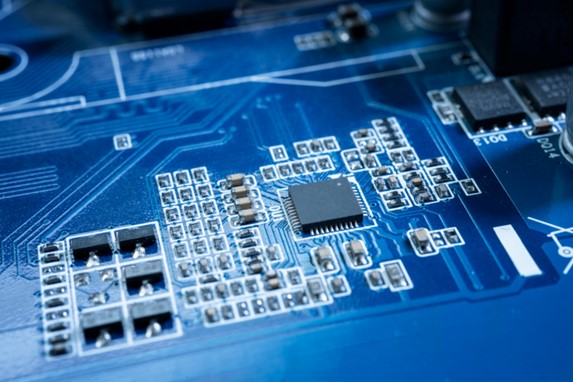
Quantum computing is an emerging field that harnesses the power of quantum mechanics to solve complex computational problems more efficiently than traditional computers. These quantum computers leverage quantum bits, or qubits, which allow for the simultaneous representation of multiple states. This enables quantum computers to process vast amounts of data and perform calculations at unprecedented speeds, making them a potential game-changer for various industries, including cybersecurity.
Key Components of Quantum Computers
Qubits
Qubits are the fundamental building blocks of quantum computers. Unlike classical bits, which can only represent a 0 or 1, qubits can exist in a superposition of both states. This unique property allows quantum computers to perform multiple calculations simultaneously, significantly enhancing their processing power.
Quantum Gates
Quantum gates are operations that manipulate qubits in a controlled manner, allowing for the execution of quantum algorithms. These gates are analogous to classical logic gates, but they operate on qubits rather than classical bits.
Quantum Entanglement
Quantum entanglement is a phenomenon where two or more qubits become linked, such that the state of one qubit is dependent on the state of the other. This interconnectedness allows for faster communication between qubits, enabling quantum computers to process information more efficiently.
Quantum Computing in Cybersecurity
Quantum computing poses significant implications for the future of cybersecurity. With their immense processing power, quantum computers have the potential to crack cryptographic systems currently considered secure. This could have widespread consequences for data privacy and protection.
Breaking Encryption Algorithms
Current encryption techniques, such as RSA and AES, rely on the computational difficulty of factoring large prime numbers or solving discrete logarithm problems. Quantum computers, however, can solve these problems exponentially faster than classical computers, thanks to algorithms like Shor’s and Grover’s. As a result, existing cryptographic methods may become vulnerable to attacks from quantum computers.
Quantum-Safe Cryptography
To mitigate the risks associated with quantum computing, researchers are developing new cryptographic methods known as post-quantum or quantum-safe cryptography. These encryption techniques are designed to be resistant to attacks from both classical and quantum computers. Examples of post-quantum cryptographic schemes include lattice-based cryptography, code-based cryptography, and multivariate cryptography.
Challenges in Quantum Computing
Despite its potential, quantum computing still faces several challenges that must be overcome before it can be widely adopted.
Scalability and Error Correction
One of the main challenges in quantum computing is achieving the necessary scalability and error correction to build large-scale quantum computers. Due to the delicate nature of qubits, they are susceptible to errors caused by environmental factors such as temperature fluctuations and electromagnetic radiation. Developing effective error correction techniques is essential to create reliable and practical quantum computers.
Quantum Software and Algorithms
Developing efficient quantum software and algorithms is another challenge that must be addressed. Although some quantum algorithms, like Shor’s and Grover’s, have been developed, many more are needed to fully unlock the potential of quantum computing.
Conclusion: The Road Ahead
Quantum computing is poised to revolutionise various industries, including cybersecurity, by providing unprecedented computational power. However, several challenges must be addressed before quantum computers become widely available. In the meantime, researchers and businesses must prepare for the potential impact of quantum computing on cybersecurity by developing and implementing quantum-safe encryption methods..

News Views and Reviews
Share This Article
📅 Last updated:

